Built Tough or Just Built to Look Tough? The Insider's Guide to Spotting Genuinely Durable Products Before You Buy
Built Tough or Just Built to Look Tough? The Insider's Guide to Spotting Genuinely Durable Products Before You Buy
There's a particular kind of frustration that hits when something you paid good money for falls apart way too soon. The zipper on a jacket that splits after one winter. The leather bag that starts peeling by summer. The "premium" mattress that sags within two years. You did your research, you spent more than you wanted to, and you still got burned.
The problem isn't that you were careless. It's that the signals most shoppers use to judge quality — price, branding, packaging, even online star ratings — are increasingly unreliable. Manufacturers have gotten very good at performing durability without actually delivering it.
This guide exists to change that. Here's what genuinely separates a buy-it-for-life product from one that's just wearing a convincing costume.
Start With Materials: The Foundation Everything Else Rests On
No amount of clever construction can save a product built from fundamentally inferior materials. This is where your investigation should begin.
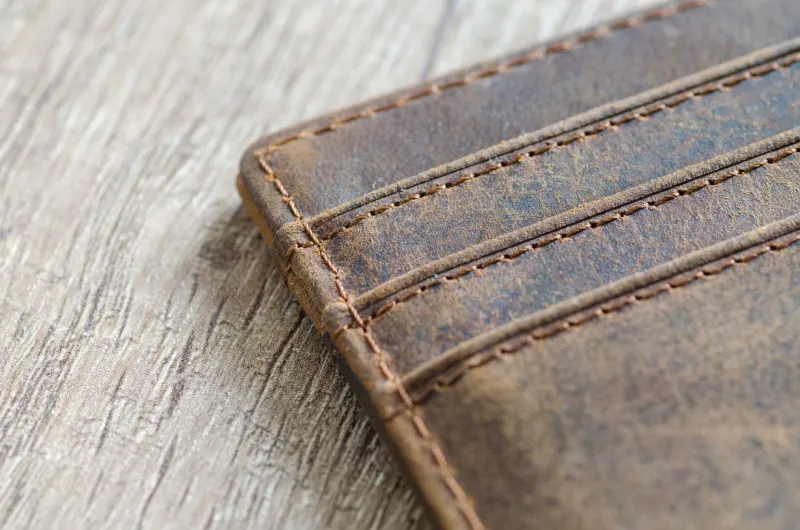
Leather goods are one of the most widely misunderstood categories in American retail. Walk into any department store and you'll see bags, belts, and wallets labeled "genuine leather" — which sounds reassuring until you learn that "genuine leather" is actually one of the lowest grades of leather available. It's made from leftover scraps bonded together with adhesives and coated with polyurethane. It looks fine on the shelf and peels apart within a year or two of real use.
What you actually want is full-grain leather — the outermost layer of the hide, with the natural grain intact. It's denser, more water-resistant, and develops a patina over years of use rather than cracking and flaking. Top-grain leather is a step below (the surface has been sanded and coated), but it's still significantly more durable than bonded or genuine leather. If a product description doesn't specify full-grain or top-grain, assume the worst.
Textiles and bedding have their own version of this problem. Thread count has been so aggressively marketed as a quality indicator that most American shoppers treat it as gospel. It isn't. A 1,200-thread-count sheet made from short-staple cotton will pill and thin out faster than a 400-thread-count sheet woven from long-staple Egyptian or Peruvian Pima cotton. What actually matters is fiber length (longer = stronger and softer over time), weave structure (percale and sateen have different durability profiles), and whether the fabric has been chemically treated to fake softness that washes out after a few cycles.
For outerwear and apparel, wool — particularly heavier weights and tighter weaves — dramatically outperforms synthetic fleece for longevity. A well-made wool coat can last 20 to 30 years with basic care. Most synthetic alternatives are headed for the textile recycling bin (or more likely, the landfill) within five years.
Construction Methods: How It's Put Together Matters as Much as What It's Made Of
Materials are only half the story. A product can be made from excellent raw inputs and still fail prematurely if the construction is sloppy.
In footwear, Goodyear welt construction is the gold standard for resoleable dress and work boots. The upper, welt, and sole are stitched together in a way that allows a cobbler to replace the sole multiple times without compromising the boot's structure. Cemented construction — where the sole is simply glued on — is faster and cheaper to produce, but once that sole wears out, the shoe is done. You can often identify welt construction by looking for a visible strip of leather or rubber running around the perimeter of the shoe where the upper meets the sole.
In bags and luggage, look at stress points: the base corners, handle attachments, and zipper pulls. Reinforced stitching, bar tacks, and rivets at high-tension areas are signs that the manufacturer thought about how the product will actually be used. Contrast that with single-stitched seams and plastic hardware — the kind that breaks on your first real trip.
For cookware and kitchen tools, forged construction (where metal is shaped under pressure) produces denser, more structurally sound products than stamped construction (where metal sheets are pressed into shape). A forged knife or pan will hold its edge and shape under conditions that would warp or dull a stamped equivalent.
Warranty Terms: Read the Fine Print, Then Ignore the Headline
A "lifetime warranty" sounds impressive. It often isn't. The critical questions are: Lifetime of what? Covered under what conditions? Honored how easily?
Many lifetime warranties cover only manufacturing defects — which means normal wear and tear, the most common reason things actually fail, isn't included. Others require you to ship items at your own expense, navigate an opaque claims process, or prove that you didn't "misuse" the product in ways the company defines very broadly.
The more meaningful signal is whether a brand has a genuine repair program. Patagonia's Worn Wear program repairs garments and sells refurbished items. Red Wing Shoes has in-store cobbling services. Darn Tough socks offer a no-questions-asked replacement guarantee that they actually honor without friction. These programs reveal something about a brand's fundamental philosophy: they built the product to last, and they're invested in making sure it does.
Conversely, a brand that offers a dramatic headline warranty but makes it nearly impossible to actually claim is engaged in marketing theater, not a real commitment to durability.
Repairability: The Feature Nobody Advertises but Everyone Should Demand
One of the most underrated durability signals is whether a product was designed to be fixed. In an era where electronics are glued shut and furniture is staple-gunned together, repairability is a quiet form of quality.
Before buying, ask these questions:
- Can worn components (soles, zippers, handles, batteries) be replaced?
- Are replacement parts available, and for how long?
- Is there a network of authorized repair shops, or instructions for self-repair?
- Does the company actively discourage or void warranties for repairs?
A cast iron skillet that can be re-seasoned indefinitely is infinitely repairable. A nonstick pan with a degraded coating is not — it's disposable by design. A modular backpack where you can replace individual straps and zippers is built for the long haul. A bag where everything is glued and sealed is built for the landfill.
Community Knowledge: The Shortcut Serious Shoppers Use
You don't have to figure all of this out alone. One of the most reliable durability research tools available to American consumers is peer community knowledge — specifically, forums and communities built around long-term product ownership.
Reddit's r/BuyItForLife community has years of real-world feedback on products across every category imaginable. Outdoor gear forums track how equipment holds up across seasons and conditions. Leatherworking communities can tell you within seconds whether a bag's leather is what the brand claims it is.
User reviews on retail sites are useful but noisy — they skew toward early impressions. Community forums surface the truth that only emerges after years of actual use.
A Quick Pre-Purchase Checklist
Before your next significant purchase, run through these questions:
- Materials: Is the material specified clearly and honestly? Is it a grade known for durability, or a vague marketing term?
- Construction: Are high-stress areas reinforced? Is the assembly method designed for longevity or cost-cutting?
- Warranty: What exactly is covered, and what's the real process for making a claim?
- Repairability: Can this be fixed when it eventually needs it? Are parts and services available?
- Brand track record: What do long-term owners say — not first-month reviewers?
None of this requires a materials science degree. It requires a little curiosity and a willingness to look past the marketing surface.
The Payoff for Getting This Right
When you learn to identify genuinely durable products, something shifts. You stop accumulating stuff and start curating it. Your home fills with fewer things that work better, last longer, and carry real meaning — the cast iron pan your family will use for decades, the jacket that looks better at year ten than it did at year one.
That's what buy-for-life shopping actually looks like in practice. Not minimalism as an aesthetic, but intentionality as a habit. And it starts with knowing what you're actually looking at when you pick something up.