Your Garage Is Telling You Something: The Real Price of Cheap Stuff Piling Up in American Homes
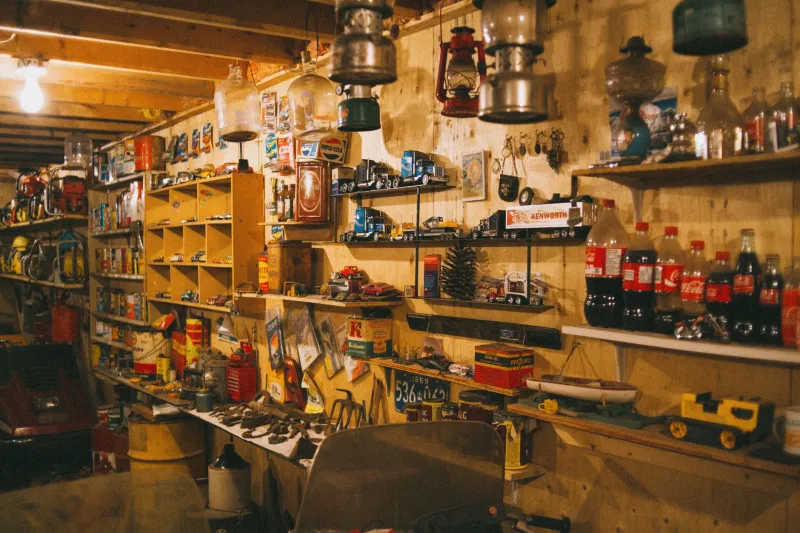
Take a slow walk through your garage. Not to find something — just to look. Chances are you'll spot a cordless drill with a dead battery that won't hold a charge, a hand mixer with a cracked housing, a tent with a broken zipper from two camping trips ago, maybe a leaf blower that runs for ten seconds before conking out. These aren't random objects. They're a financial record. Every single one of them represents money you spent, value you never fully received, and a problem you eventually had to solve again — usually by buying something else.
America has a graveyard problem. Not the kind you're thinking of. This one lives in storage units, kitchen cabinets, hall closets, and yes, garages across the country. It's a slow, quiet accumulation of products that underdelivered, broke early, or simply couldn't hold up to the ordinary demands of daily life. And the cost of that graveyard is way bigger than most people realize.
The Numbers Nobody Talks About at the Register
Here's a rough picture: the average American household spends somewhere in the range of $1,700 to $2,200 per year on household goods, tools, and small appliances, according to Bureau of Labor Statistics consumer expenditure data. A significant chunk of that — estimates from sustainability researchers and consumer advocates suggest anywhere from 20 to 40 percent — goes toward replacing items that shouldn't have needed replacing yet.
That's potentially $500 to $800 a year spent not on new things, but on re-buying the same categories of things you already purchased. A new set of kitchen knives because the last set went dull in six months. Another garden hose because the cheap one cracked over winter. A second (or third) set of mixing bowls because the first ones warped, chipped, or shed their coating.
When you look at it that way, the "affordable" option starts looking a lot less affordable.
Three Household Categories Where This Hits Hardest
Kitchen Appliances
The kitchen is ground zero for repeat purchases. Blenders are a classic example. A budget blender at $30 might feel like a win at checkout. But when the motor burns out after eight months of smoothie-making, and you buy another, and then another, you've spent $90 over two years — more than a mid-range blender built to last a decade would have cost you. Multiply that logic across your coffee maker, your hand mixer, your toaster, and suddenly your kitchen has become a revolving door of replacements.
This isn't just a personal finance issue. All those discarded appliances end up somewhere. The EPA estimates that Americans generate over 6 million tons of small appliance waste annually, most of which cannot be easily recycled and ends up in landfills.
Power Tools and Hand Tools
Talk to anyone who works with their hands for a living — a contractor, a plumber, a dedicated DIYer — and they'll tell you the same thing: cheap tools cost more in the long run. A bargain-bin cordless drill might survive light use, but under regular pressure, the chuck loosens, the battery cells degrade, and the torque settings stop holding. You end up buying a better drill anyway, except now you've also got the junker taking up drawer space.
Beyond the replacement cost, there's the hidden cost of the job itself. A stripped screw caused by a poorly-made driver bit. A measurement error from a tape measure with a loose hook. Cheap tools introduce friction and failure into projects, and that friction has a dollar value.
Outdoor and Seasonal Gear
Outdoor gear is particularly susceptible to the cheap-buy cycle because it's only used part of the year, which makes the degradation less visible until you actually need the thing. You pull out the camping chairs in June and discover the fabric has dry-rotted. The hiking boots you wore twice last fall are delaminating at the sole. The folding table that seemed sturdy in the store wobbles dangerously under a Thanksgiving spread.
Seasonal items feel low-stakes because you don't use them constantly, but that's exactly why quality matters — they need to survive storage conditions, temperature swings, and the kind of neglect that real life demands.
The Audit You Probably Haven't Done
Here's a challenge worth taking seriously: spend twenty minutes this weekend doing a consumption audit. Walk through your home and identify every product that has broken, underperformed, or been replaced in the last three years. Write it down. Then add up what you originally paid for each one.
Most people who do this exercise are genuinely surprised. Not just by the total dollar amount, but by the patterns — certain categories where they keep cycling through replacements, certain price points that consistently disappoint. That pattern is data. It tells you where your buying habits are costing you more than you think.
This isn't about guilt. It's about clarity.
Reframing Durability as the Default, Not the Upgrade
There's a cultural script in American consumer life that treats cheap as smart and expensive as indulgent. "Why spend more than you have to?" is a reasonable-sounding question — but it's based on a flawed assumption that the cheap version and the quality version are delivering the same thing at different price points. They're not. They're delivering different lifespans, different experiences, and different long-term costs.
Buying for life isn't about luxury. It's about refusing to pay for the same thing three times. It's about understanding that a $90 kitchen knife you use for fifteen years is a better financial decision than three $30 knives that each last five years — and a far better environmental one, since you've kept two products out of the waste stream entirely.
Durability is the original sustainable choice. Before recycling programs and carbon offsets and green certifications, the most environmentally responsible thing a consumer could do was simply buy something that lasted — and then actually use it until it couldn't be used anymore.
What To Do With What's Already in the Graveyard
If your garage already looks like a product cemetery, don't stress about it. Start where you are. Before you replace the next broken item with another cheap version, pause and ask: what would it cost to buy this well, once? Research the category. Look for brands with genuine repair policies, warranties that mean something, and a track record of longevity. Sites like this one exist specifically to help you find those answers without having to dig through marketing fluff.
And for what's already broken? Check if it's repairable before you toss it. A surprising number of small appliances and tools can be fixed for a fraction of replacement cost — if they were built to be fixed in the first place, which is itself a marker of quality worth noting before your next purchase.
Your garage doesn't have to be a graveyard. It can be a workshop, a storage space, a launchpad for weekends well spent. But that starts with buying things that are actually built to be there for the long haul.