Shopping for Grandchildren You Haven't Met Yet: The Case for Buying with Generations in Mind

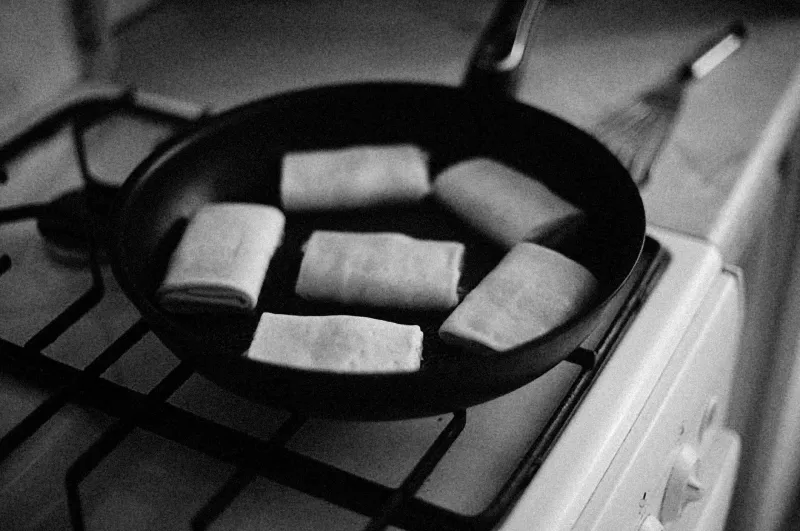
There's a cast iron skillet sitting in a kitchen in rural Ohio that has cooked somewhere north of 40,000 meals. It belonged to a great-grandmother who bought it in the 1950s, passed through two daughters, and now lives on the stovetop of a 34-year-old who uses it every single morning. Nobody planned for that skillet to become a family artifact. It just happened to be built well enough that throwing it away never made sense.
That's the quiet magic of genuinely durable goods — they outlive their original purpose and become something more. But what if we stopped leaving that to chance? What if, instead of asking will this last me a few years, we started asking will this last my kids a few decades?
That shift in thinking — small as it sounds — fundamentally rewires how you shop.
The Psychology of Buying Forward
Most consumer decisions are framed around the self and the immediate future. Will this fit in my kitchen? Does it match my style right now? Can I afford it this month? These are reasonable questions, but they're also deeply short-sighted in a way that costs American families real money over time.
When you expand your mental timeline to include the next generation, something interesting happens: price-per-use math starts to look completely different. A $400 piece of cookware sounds outrageous until you consider that your daughter might use it for 30 years after you're done with it. Suddenly that's less than a dollar a year across a half-century of meals. Meanwhile, the $40 nonstick pan you replace every two years costs you $1,000 over the same stretch — and ends up in a landfill a dozen times over.
Psychologists who study consumer behavior have noted that people who shop with legacy in mind tend to feel more satisfied with their purchases long-term. There's a sense of intentionality — of participating in something larger than a single transaction — that disposable shopping simply can't replicate. You're not just buying a tool. You're making a decision that will ripple forward.
Where the Heirloom Mentality Pays Off Most
Not every product category is equally suited to multi-generational thinking, so it's worth being strategic about where you apply this mindset.
Cast iron and carbon steel cookware are the obvious poster children. Brands like Lodge, which has been making cast iron in Tennessee since 1896, or the French workhorse Le Creuset, produce pieces that genuinely improve with age. Seasoning builds up, handles stay solid, and the cooking surface gets better the more it's used. These aren't products you replace — they're products you inherit.
Hand tools and woodworking equipment are another category where quality compounds over time. A well-maintained set of chisels, a solid hammer with a hickory handle, or a properly tuned hand plane can outlast multiple human lifetimes. Brands like Lie-Nielsen and Bahco build tools with this in mind, using materials and manufacturing processes that are essentially immune to obsolescence. Your kid doesn't need to know anything about woodworking for these to be worth passing on — they just need to appreciate something that works.
Furniture built from solid hardwood — not particleboard dressed up with veneer — represents one of the most impactful places to apply generational thinking. An American-made oak dining table from a craftsman workshop will look better in 50 years than it does today. The same cannot be said for the flat-pack alternative that starts wobbling after the third move.
Leather goods and bags made with full-grain leather patina beautifully and hold up to decades of daily use. A quality leather briefcase or wallet, properly cared for, becomes more characterful with age — the kind of thing a kid will actually want to keep.
Mechanical watches are worth mentioning, not because everyone needs one, but because they represent one of the few consumer electronics that can genuinely be passed down. A well-serviced automatic movement will outlast its owner by generations. The watch industry has built an entire marketing language around this idea — and for once, the marketing is actually true.
Real Families, Real Heirlooms
This isn't abstract philosophy. Families all over the country are already doing this, sometimes without even realizing it.
In Portland, Oregon, a contractor named Marcus has been using the same set of Estwing hammers his father bought in 1978. He's replaced the handles twice, but the heads are original. He's already earmarked them for his teenage son, who's started showing interest in construction. "I could buy him new ones," Marcus says, "but there's something about handing him the same hammer my dad handed me."
In Nashville, a home cook named Priya inherited her mother-in-law's KitchenAid stand mixer — a model from the early 1980s that still runs perfectly. "The motor on that thing is built completely differently than what they make now," she says. "I've had it serviced once. It'll probably outlive me too."
These stories aren't rare. They're just undervalued in a culture that tends to celebrate the new over the enduring.
How to Start Shopping This Way
You don't have to overhaul your entire approach to consumption overnight. The heirloom mindset is something you can apply incrementally, one category at a time.
Start by identifying the things in your home that get used the most — daily-use items like cookware, tools, bags, and furniture. These are the highest-leverage places to make generational investments because they'll accumulate the most use over time.
Then ask three questions before you buy:
-
Is this repairable? Products that can be serviced, rebuilt, or have parts replaced are infinitely more generational than sealed, disposable units. If you can't get a replacement part in 10 years, it's not built to last.
-
Is it made from materials that age well? Wood, cast iron, leather, brass, and stainless steel all tend to improve or hold steady with age. Most plastics, composites, and synthetic coatings don't.
-
Would I be proud to give this to my kid? It sounds sentimental, but it's genuinely useful. If the answer is yes, you're probably making a solid choice. If you'd be embarrassed to pass it on, that tells you something.
The Deeper Point
Buying for the next generation isn't just about saving money or reducing waste — though it does both of those things admirably. It's about choosing to participate in a different relationship with the stuff in your life.
Disposable culture tells us that things are replaceable, interchangeable, and ultimately unimportant. The heirloom mindset says the opposite: that what we own can carry meaning, that craftsmanship is worth honoring, and that the best purchases are the ones that outlive the original transaction entirely.
The skillet in that Ohio kitchen isn't just a skillet anymore. It's a thread connecting four generations of people who never all sat in the same room together. That's not something you can buy at a big-box store. But you can start building it — one intentional purchase at a time.