Thirty Years With the Same Toaster: What Long-Term Ownership Does to Your Brain, Your Wallet, and Your Soul
Somewhere in a suburb outside Cincinnati, a retired schoolteacher named Marlene still uses the KitchenAid stand mixer her mother-in-law bought in 1987. It's not a vintage prop or a conversation piece — it's just Tuesday. She makes bread in it. She made her daughter's wedding cake in it. Last month, she used it to whip cream for a dinner party.
"I never thought about it as a special thing," she told us. "It was just always there."
That phrase — it was just always there — turns out to be more profound than it sounds.
The Quiet Revolution of Keeping Things
We live in a culture that has optimized almost every part of the shopping experience except the part that comes after you buy something. Retailers are brilliant at getting you excited about an acquisition. Nobody's particularly invested in what happens thirty years later.
But a small and growing community of Americans is pushing back on the upgrade cycle — not out of nostalgia, not because they can't afford new stuff, but because they've discovered that long-term ownership does something genuinely interesting to the way they experience life.
The psychological term for it is object attachment, but that phrase undersells what's actually going on. It's less about clinging to stuff and more about the way deep familiarity with a tool or object can make you better at using it, more confident in your own judgment, and — this one surprised us — measurably less anxious about money.
The Financial Picture Nobody Talks About
Let's start with the math, because it's striking.
The average American household spends roughly $1,700 a year on household appliances and equipment, according to Bureau of Labor Statistics data. That figure includes replacements, upgrades, and impulse buys driven by the slow creep of planned obsolescence. Over thirty years, that's more than $50,000 — not counting the environmental cost of manufacturing, shipping, and disposing of all that stuff.
Now consider Marlene's mixer. Her mother-in-law paid around $200 for it in the late '80s. Adjusted for inflation, that's roughly $530 in today's dollars. One purchase. Thirty-seven years of bread, cake, and whipped cream. The cost-per-use at this point is essentially zero.
But here's what's interesting: people who commit to long-term ownership don't just save money on individual items. They tend to develop a different relationship with spending altogether. When you know you're buying something you'll use for decades, you slow down. You research. You stop grabbing the cheapest option and start asking harder questions about what's actually worth owning.
That shift in mindset compounds over time in ways that are hard to quantify but easy to feel.
When Objects Accumulate Meaning
There's a reason antique dealers talk about "provenance" — the history of who owned something and how it was used. Provenance adds value. Not monetary value, necessarily, but a different kind of worth that's harder to replace.
Dennis, a woodworker in rural Vermont, inherited a set of hand planes from his grandfather. He's been using them for twenty-two years. "Every time I pick one up, I think about him," he said. "And I think about every project I've used it on. There's this whole story in the tool."
This is what we're calling the Heirloom Effect — the slow accumulation of meaning that happens when an object outlives its original purchase context and becomes part of your actual life story. It's not sentimental in a saccharine way. It's more like the difference between a photograph and a memory. One is a record. The other is alive.
Objects that have been with us through major life events — a move, a marriage, a loss, a new baby — carry an emotional weight that cheap replacements simply can't replicate. And that weight, paradoxically, makes us more careful with them, which makes them last even longer.
The Environmental Argument, Made Personal
We talk a lot about sustainability in abstract terms: carbon footprints, landfill overflow, fast fashion. Those conversations matter, but they're easy to tune out when they feel distant.
Long-term ownership makes the environmental argument personal.
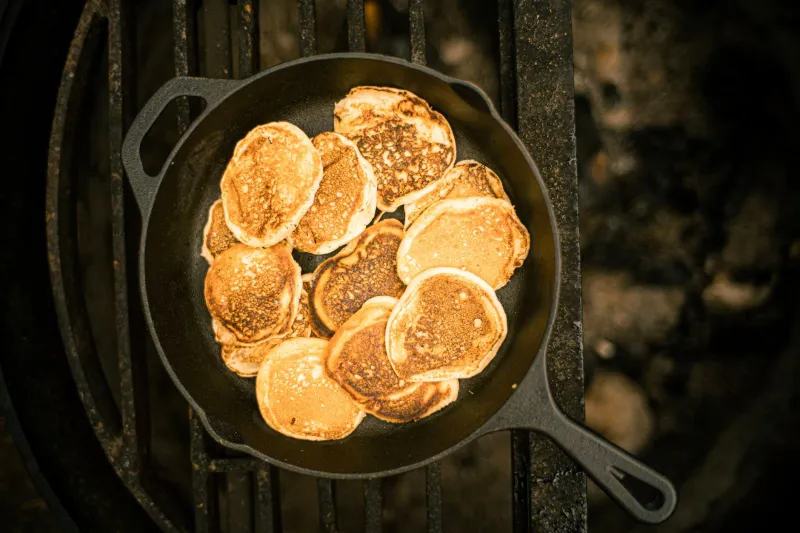
When you've had the same cast iron skillet for fifteen years, you start to understand, viscerally, what it would mean to throw it away. You understand what went into making it. You understand what it would take to replace it. And you start to see the disposable economy not as a convenience but as a kind of violence — against your wallet, against your sense of continuity, and against the planet.
Research from the Ellen MacArthur Foundation suggests that extending the active life of clothing, appliances, and electronics by just nine months reduces their carbon footprint by 20 to 30 percent. Imagine what thirty years does.
The people we spoke with who've committed to long-term ownership don't describe themselves as environmentalists, necessarily. They describe themselves as people who got tired of buying the same thing twice.
What to Actually Look For
If the Heirloom Effect sounds appealing, the obvious question is: how do you buy things that will actually last thirty years?
A few principles emerged consistently from the people we interviewed:
Repairability is everything. The single biggest predictor of long-term ownership isn't build quality — it's whether you can fix something when it breaks. Brands that sell replacement parts, publish repair manuals, and design products with maintenance in mind are your best bet. Brands that glue things shut and void warranties for self-repair are telling you something important about their intentions.
Materials matter more than features. The cast iron pan outlasted the non-stick. The leather boots outlasted the synthetics. The solid wood furniture outlasted the particleboard. Every person we spoke with had some version of this story. Flashy features age badly. Good materials don't.
Buy from companies that have been around. This isn't foolproof — even old companies cut corners — but a manufacturer with a 50-year track record has at least demonstrated that their products don't fall apart fast enough to destroy their reputation. Longevity begets longevity.
Resist the upgrade reflex. The hardest part of long-term ownership isn't finding durable products. It's ignoring the constant cultural pressure to replace perfectly good things with marginally newer ones. That pressure is real, it's expensive, and it's almost entirely manufactured.
The Thing Nobody Expected
When we asked people what surprised them most about keeping things for decades, almost nobody mentioned money first. They mentioned something softer.
"I trust myself more," said one woman who's had the same Swiss Army knife since 1994. "I made a good decision once, and it held up. That's a good feeling."
There's something quietly radical about that. In a consumer culture that profits from self-doubt — from the nagging sense that what you have isn't quite good enough — choosing to keep something for thirty years is an act of confidence. It's a declaration that your original judgment was sound, that the thing you chose has value, and that you don't need a corporation's marketing department to tell you otherwise.
Marlene's mixer is still on her counter. It'll probably be there when she's gone, and whoever inherits it will have a choice: sell it, donate it, or keep making bread.
Something tells us they'll keep making bread.