They Don't Make 'Em Like They Used To — And Here's Exactly Why (Plus the Brands Proving It Doesn't Have to Be That Way)
They Don't Make 'Em Like They Used To — And Here's Exactly Why (Plus the Brands Proving It Doesn't Have to Be That Way)
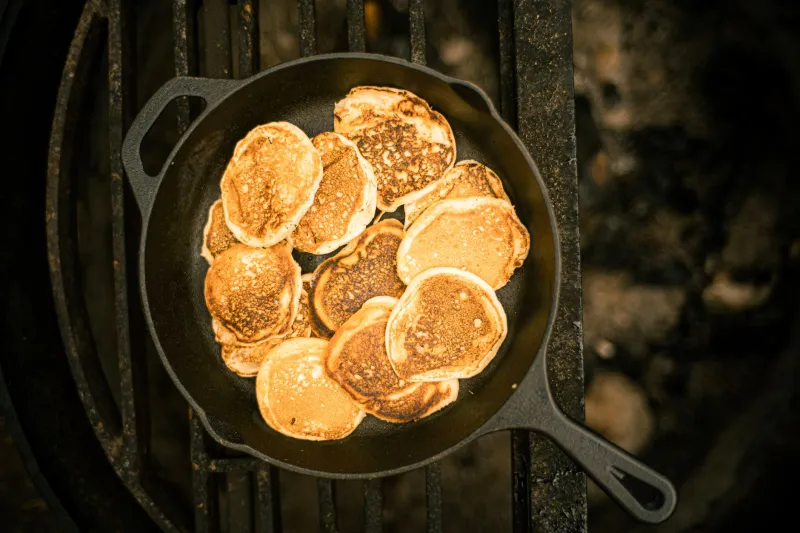
There's a cast iron skillet sitting in my aunt's kitchen in rural Ohio that's been cooking eggs since the Eisenhower administration. It has a small chip on the handle, a seasoning so dark it looks like volcanic glass, and absolutely zero interest in retiring. Meanwhile, the "professional-grade" nonstick pan I bought four years ago is already flaking into my scrambled eggs.
This isn't just a family story. It's a pattern playing out in kitchens, garages, closets, and tool sheds across the country — and it raises a genuinely uncomfortable question: if technology has improved so dramatically over the past six decades, why does so much of what we buy today fall apart faster than the stuff our grandparents owned?
The answer is more intentional than most people realize.
The Moment Everything Changed
The shift didn't happen overnight. Through the 1950s and into the 1960s, American manufacturing was largely oriented around durability. Companies competed on how long their products lasted, partly because consumers had lived through the Depression and World War II rationing — they expected things to endure. A refrigerator was a major investment, and it was built accordingly.
Then came the concept of "planned obsolescence," a design philosophy that General Motors design chief Alfred Sloan had been quietly championing since the 1920s but that truly went mainstream in the postwar consumer boom. The idea was elegant in a cynical way: if products wore out or went out of style on a predictable schedule, people would keep buying. Annual model refreshes, materials chosen for cost over longevity, components engineered to fail just after the warranty expired — these weren't accidents. They were strategies.
By the 1980s and 1990s, globalized manufacturing and the rise of big-box retail turbo-charged the trend. Brands that once competed on quality were suddenly competing on shelf price. Margins got squeezed. Materials got cheaper. Tolerances got looser. And consumers, dazzled by low sticker prices, largely went along with it.
What Actually Got Worse (And Why)
Talk to anyone who repairs things for a living and you'll hear the same frustration. Appliance technicians describe washing machines that used to run 20 years now failing in five or six — not because the technology got worse, but because the bearings, seals, and motors are now made to a lower spec. Furniture restorers talk about the transition from solid hardwood frames to particleboard and staple-gun construction that simply can't be repaired. Cobblers — the ones still in business, anyway — describe shoe soles glued rather than stitched, uppers made from bonded leather that peels instead of patinas.
Specific product categories where the decline is most dramatic:
Cookware. The nonstick revolution of the 1980s and 90s produced lighter, cheaper pans that cook beautifully — for about two years. Compare that to a vintage Lodge cast iron or a Mauviel copper pan that cooks just as well and genuinely improves with age.
Hand tools. Vintage Craftsman tools made before Sears outsourced production are now collector's items because they were built to a standard that modern versions from the same brand rarely match. The steel was harder, the tolerances tighter, the handles designed for actual grip.
Clothing and textiles. Pre-1970s denim, flannel, and wool were woven at higher thread counts with natural fibers that softened and strengthened over time. Today's fast-fashion equivalents are designed to look good on a rack for one season, not to survive a decade of Saturday morning chores.
Small appliances. A KitchenAid stand mixer from the 1970s has an all-metal gear housing and will outlive its owner. Many current models use nylon gears that strip under heavy use — a cost-cutting measure that saves a few dollars per unit and costs consumers a $400 replacement every decade.
The Engineering Isn't the Problem — The Incentives Are
Here's the frustrating part: we genuinely have better materials science, better manufacturing precision, and better design tools than any previous generation. There is no technical reason a modern appliance couldn't be built to last 40 years. The barrier isn't capability — it's business model.
When a company's revenue depends on repeat purchases, durability is a liability. A product that lasts 30 years is a customer you only sell to once. A product that lasts five years is a customer you sell to six times. The math is ugly, but it's real.
This is also why warranty periods are such a useful signal. A company that offers a lifetime warranty is betting on its own product. A company that offers 90 days is telling you exactly what it thinks of its craftsmanship.
The Brands Actually Bucking the Trend
Here's where it gets genuinely encouraging. A growing number of manufacturers have decided — sometimes for philosophical reasons, sometimes because they've found a market willing to pay for it — to return to heirloom-quality construction. They're worth knowing.
Darn Tough Vermont makes merino wool socks with an unconditional lifetime guarantee. They'll replace any pair, no questions asked, forever. That guarantee only works because the product is built to a standard where replacements are rare.
All-Clad stainless cookware is bonded, riveted, and made in Pennsylvania to a spec that hasn't changed much in decades. It costs more upfront and will genuinely outlast you.
Filson, the Seattle-based outfitter, still makes waxed canvas bags and wool coats using construction techniques from the 1890s. Their gear is ugly in the best way — built for function, not fashion cycles.
Estwing hammers are still forged in one piece from American steel in Rockford, Illinois. They've been making the same hammer for over a century because it's never needed redesigning.
Red Wing Boots resoled and recrafted their boots long before sustainability became a marketing buzzword. They have repair centers specifically because they expect their boots to outlast multiple soles.
The pattern across all of these brands is consistent: they use better materials, employ skilled construction, back their products with genuine guarantees, and charge prices that reflect actual cost rather than raced-to-the-bottom margin math.
How to Shop Like You're Buying an Heirloom
You don't have to be wealthy to apply heirloom thinking to your purchases. You just have to shift your frame from "what does this cost today" to "what does this cost per year of use."
A $400 cast iron Dutch oven that your kids inherit someday costs effectively nothing over a lifetime. A $60 coated aluminum pot you replace every three years costs $20 a year — more expensive, worse for the environment, and gone without a trace.
Before you buy anything significant, ask: Does this brand offer a warranty that suggests they believe in it? Is it repairable? Are there reviews from people who've owned it for 10+ years? Is it made from materials that age well rather than just look good new?
Your grandparents weren't buying better stuff because they were smarter shoppers. They were buying in an era when more companies competed on longevity. We're in a different era now — but the companies worth buying from are the ones that never forgot what made things worth keeping.
Find those brands. Buy once. Keep forever.