Buying for Someone You'll Never Meet: The Quiet Art of Choosing Products That Outlast You
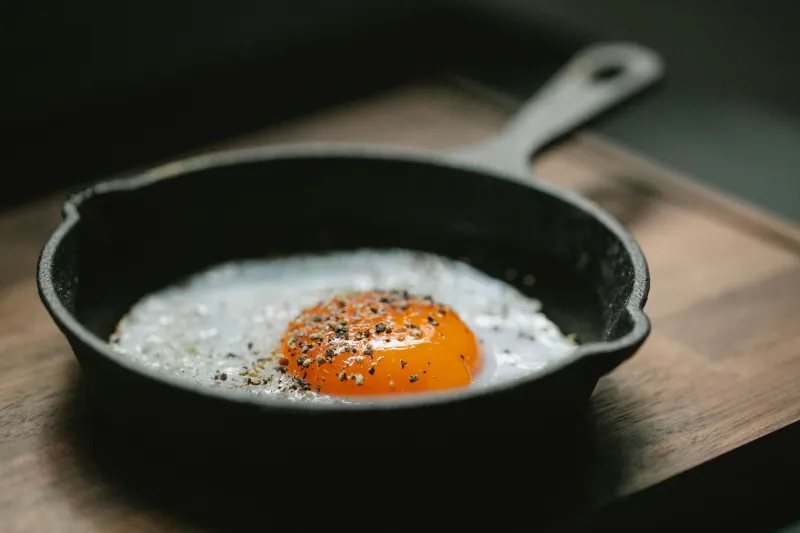
Somewhere in America right now, somebody is pulling a cast iron skillet out of a cabinet and thinking, my grandmother bought this thing. They're not thinking about its carbon footprint or its cost-per-use. They're just cooking eggs in it, the same way their grandmother did, and the same way their own kids probably will someday.
That skillet is doing something extraordinary. It's connecting people across time.
Most of us don't buy things with that kind of timeline in mind. We buy for now — for the need we have today, the budget we're working with this week, the aesthetic that feels current this season. And that's completely understandable. But there's a different way to approach at least some of your purchases, one that reframes the whole act of buying from a transaction into something closer to stewardship.
What does it mean to buy something for a person you'll never meet?
The Heirloom Isn't What You Think It Is
When most people hear the word "heirloom," they picture antique jewelry, a grandmother's china set, maybe a rocking chair with a family story attached. Precious things. Fragile things. Things kept behind glass.
But real heirlooms — the ones that actually get used across generations — tend to be humble. A good knife. A wool blanket. A hand tool that still holds an edge. A leather bag that develops character instead of cracking. These aren't museum pieces. They're workhorses that happened to be built well enough to keep working.
The distinction matters because it shifts your focus away from sentiment and toward quality. You're not trying to buy something emotionally significant. You're trying to buy something so genuinely well-made that significance accumulates around it naturally, over time, through use.
That's a very different shopping mindset.
What Actually Survives the Decades
Not everything that feels premium today will still be functional in 30 years. So what separates the things that make it from the things that don't?
Materials are everything. Solid wood outlasts particleboard by generations. Full-grain leather outlasts bonded leather by decades. Cast iron, carbon steel, stainless steel, solid copper — these materials age gracefully. They can be cleaned, re-seasoned, sharpened, polished back to life. Composite materials, synthetic blends, and anything described as "engineered" tend to have a ceiling. They perform well until they don't, and then there's no fixing them.
Repairability is a feature, not a bonus. The products most likely to survive long enough to become heirlooms are the ones that can be taken apart, serviced, and put back together. A Swiss watch with a mechanical movement can be serviced indefinitely. A cheap quartz watch gets thrown away when the battery compartment corrodes. A pair of boots with a Goodyear welt construction can be resoled five, six, seven times. Cemented soles can't. Ask before you buy: can this be fixed? If the answer is no, or if you have to squint to imagine a scenario where it could be, that's telling you something.
Timeless design beats trendy design every time. Products with a strong, classic aesthetic tend to survive the cultural shifts that make other things feel dated. A well-made Windsor chair doesn't go out of style. A cast iron Dutch oven doesn't look like it belongs to a specific decade. When you're buying for longevity, lean toward the design that has already proven itself over time rather than whatever feels fresh right now.
The Psychology of Buying Forward
Here's the interesting thing about shopping with a multi-generational mindset: it makes you less impulsive, almost automatically.
When you ask yourself, would I want to pass this down someday? — you suddenly have a filter that cuts through a lot of noise. The cheap gadget that seemed convenient? Doesn't pass the test. The trendy piece that's already on clearance six months after launch? Nope. The thing that costs three times as much but is made from materials that will still be intact when your hypothetical grandkids are middle-aged? Now we're talking.
This isn't about being precious or sentimental. It's about using a long time horizon as a practical decision-making tool. It forces you to interrogate a purchase in a way that "will I use this?" simply doesn't.
There's also something quietly countercultural about it. Consumer culture is almost entirely oriented around the present moment — buy now, upgrade soon, replace often. Deciding to opt out of that cycle, even partially, is a small act of resistance. You're saying: I believe in making things last. I believe in quality. I believe that what I own should mean something beyond its immediate utility.
Real Examples of Multi-Generational Ownership
This isn't theoretical. Across the country, families are living with products that have defied the throwaway economy.
A woodworker in Vermont still uses his great-uncle's Stanley hand planes from the 1940s. They've been cleaned and tuned, but the cores are original. He says they work better than most new tools he's tried.
A woman in Georgia has her mother's KitchenAid stand mixer, purchased in 1978. It's been serviced once. It still makes bread every Sunday.
A family in Oregon camps with a canvas wall tent that's been in the family since the 1960s. They've replaced the poles, patched a seam, re-waterproofed the canvas twice. The tent itself is still original.
None of these products were the cheapest option when they were purchased. All of them have delivered value so far beyond their original price that the initial cost is almost meaningless at this point.
How to Start Buying This Way
You don't need to overhaul your entire relationship with shopping overnight. Start with one category — the thing you use most often, or the area where you've burned through the most replacements over the years.
Ask yourself: What's the version of this that someone might still be using in 40 years? Then research that thing. Look for brands with a genuine track record, not just marketing language about durability. Look for products with active repair communities, available spare parts, and warranties that actually mean something. Look for materials that age rather than degrade.
And then — this is the hard part — be willing to pay for it. Not recklessly, but deliberately. A $300 pan that lasts 80 years is not a $300 purchase. It's a $3.75-per-year purchase. The math is almost always on the side of quality when you stretch the timeline out far enough.
The Person You're Really Buying For
There's something almost meditative about this kind of shopping. You're making a decision that acknowledges you won't be around forever, that the things you own will outlast you, and that you have some say in what gets left behind.
Maybe your grandkids will treasure what you leave them. Maybe they'll just use it without thinking much about where it came from. Either way, you'll have put something real and lasting into the world instead of something destined for a landfill.
The skillet doesn't know whose kitchen it's in. But it keeps doing its job, decade after decade, connecting people across time in the most ordinary, beautiful way possible.
That's worth buying for.