Fewer Clothes, More Freedom: The Case for a Wardrobe You Actually Keep
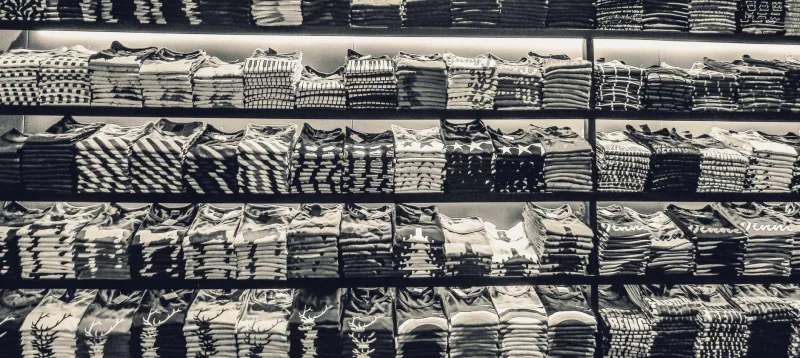
Most American closets are quietly lying to us. They're stuffed — absolutely packed — and yet somehow we still stand there on Tuesday morning convinced we have nothing to wear. That's not a storage problem. That's a quality problem dressed up as a quantity problem.
The average American buys roughly 65 garments a year. Sixty-five. That's more than one new piece of clothing every single week. And a significant chunk of those pieces get worn fewer than five times before they're donated, trashed, or shoved into a corner of the closet never to be seen again. We've been sold the idea that more options equals more freedom, but anyone who's ever stared at a rail of fast-fashion impulse buys knows that's not how it actually feels.
There's a better way to dress yourself. It costs less over time, takes up less mental energy, and — if you do it right — means you never have to think too hard about getting dressed again.
The Real Price Tag on a $15 T-Shirt
Let's do some honest math. A fast-fashion tee might run you $12 to $18. Sounds like a win. But if it pills after four washes, shrinks out of shape by summer's end, and ends up in a donation bin by fall, you've paid roughly $15 for maybe 20 wears. That's 75 cents per wear.
Now consider a well-constructed cotton tee from a brand that actually cares about fabric weight and stitching — something in the $45 to $65 range. Annoying upfront, sure. But if that shirt holds its shape for five or six years of regular rotation, you're looking at potentially 200-plus wears. Do the math and you're paying somewhere around 20 to 30 cents per wear. Half the cost, and you actually like putting it on.
This cost-per-use framework is something we talk about a lot here at Buy For Life, and it applies nowhere more obviously than in your closet. The sticker price is almost always a distraction from the real conversation.
Decision Fatigue Is Costing You More Than Money
Here's something the fashion industry would rather you not think about: every item in your closet that you're not sure about is quietly draining your mental energy.
Psychologists who study decision fatigue have found that the sheer number of choices we face each day degrades the quality of our thinking over time. Your morning wardrobe routine might seem trivial, but if you're spending 10 to 15 minutes sorting through options that don't quite work — the shirt that's a little too short, the pants that fit weird since you washed them — you're starting your day already a little depleted.
A smaller, more intentional wardrobe eliminates that friction. When everything in your closet fits well, works together, and holds up wash after wash, getting dressed stops being a low-grade stressor and starts being a non-event. That's not a small thing. Multiply those rescued minutes and that preserved mental clarity across a year and you're talking about a meaningful quality-of-life upgrade.
What "Timeless" Actually Means in Practice
The word "timeless" gets thrown around a lot in fashion writing, usually by people trying to sell you something. So let's be specific about what it actually means when you're shopping for pieces meant to last.
Timeless doesn't mean boring. It means avoiding details that are aggressively of-the-moment — the exaggerated silhouettes, the microtrend color palettes, the logo-heavy branding that screams a particular season. It means choosing cuts and colors that have shown staying power across decades rather than across Instagram cycles.
In practical terms, this usually looks like:
- Neutral foundations — navy, white, grey, camel, black, olive — that mix and match without effort
- Classic cuts that flatter without depending on current trend context to make sense
- Natural or high-quality blended fabrics — wool, cotton, linen, leather — that age gracefully rather than degrading
- Minimal branding that won't date the piece to a specific era
Think of it as building a wardrobe the way you'd build a good playlist — a core of reliable classics that always work, with room for a few personal favorites that reflect who you actually are.
The Environmental Angle Nobody Talks About Enough
Clothing waste in the United States is staggering. Americans throw away roughly 81 pounds of clothing per person per year. Most of it ends up in landfills, where synthetic fabrics can take hundreds of years to break down. Even "donated" clothing often doesn't find a second life — the secondhand market is so flooded with fast-fashion castoffs that a significant portion ends up exported overseas or discarded anyway.
Buying less and buying better is one of the most direct ways an individual consumer can reduce their contribution to that cycle. A jacket you wear for 15 years isn't just a smart financial move — it's 14 years' worth of replacement purchases that never had to be manufactured, shipped, or eventually landfilled.
This is the part where the economics and the ethics line up neatly, which is genuinely satisfying when it happens.
Building Your "Buy It For Life" Closet
So what does this actually look like in practice? Here's a grounded starting point.
Start with what you already have. Before buying anything, do a ruthless audit. Pull everything out, try it on, and ask one honest question: does this fit well, do I actually wear it, and would I buy it again today? If the answer to any of those is no, it goes. You're not building on top of clutter — you're starting with a cleared foundation.
Identify the gaps, not the wants. What do you actually reach for every week? What's missing from your rotation that would make getting dressed easier? Buy to fill genuine gaps, not to scratch an impulse itch.
Research before you spend. When you're buying fewer things at higher price points, the stakes are higher. Read reviews that specifically mention longevity. Look for brands that offer repairs or stand behind their products. Check fabric content labels — natural fibers generally outlast synthetics in everyday wear.
Give yourself permission to spend more, less often. This is the psychological shift that makes the whole thing work. Buying one $180 pair of trousers instead of three $60 pairs over the course of a year doesn't feel indulgent once you've run the numbers. It feels like the obvious move.
The Closet as a Philosophy
There's something almost countercultural about owning less clothing in 2024. The entire fast-fashion machine — the influencer hauls, the constant "new arrivals" emails, the seasonal pressure to refresh your look — is engineered to make you feel like what you own is already outdated.
Resisting that pressure isn't just a money move. It's a clarity move. Knowing that what's in your closet is there because it earns its place, because it works, because it's going to be there next year and the year after — that's a quiet kind of confidence that no haul video can replicate.
Your wardrobe doesn't need to be a rotating door. It can be a collection of things you genuinely value, built slowly and kept well. That's what buying for life looks like when you open your closet in the morning.