Sew It, Solder It, Save It: Why Repairing Your Stuff Is the Most Subversive Thing You Can Do Right Now
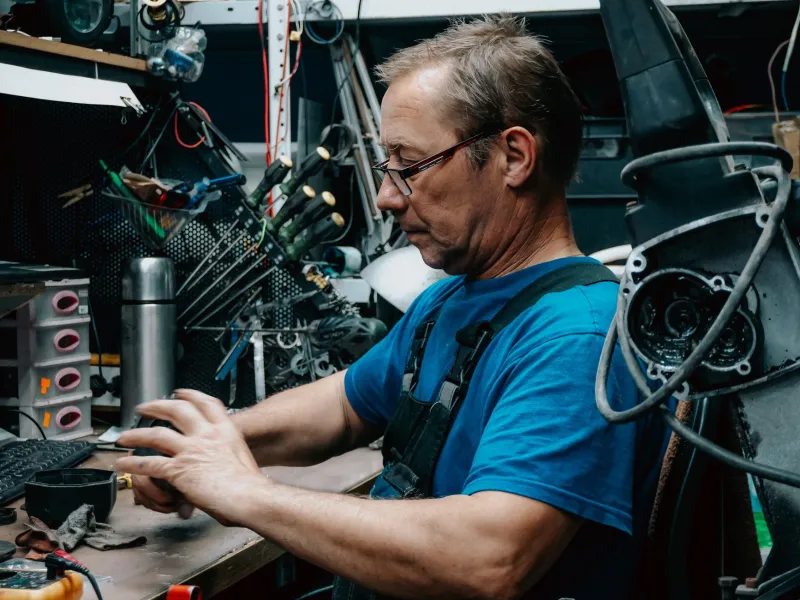
There's a small shop on a side street in Portland, Oregon, wedged between a coffee roaster and a bike co-op, where a guy named Marcus has been fixing vacuum cleaners, lamps, and small appliances for going on nineteen years. He doesn't have a slick website. He doesn't run Instagram ads. What he does have is a six-week waitlist and a loyal customer base that treats him like a neighborhood treasure — because that's exactly what he is.
Marcus represents something that corporate America would really rather you didn't think too hard about: the possibility that you don't need to buy a new one.
The System Was Designed to Break Down
Let's be honest about what's happening here. Planned obsolescence isn't a conspiracy theory — it's a documented business strategy. Products are engineered with lifespans calibrated to keep you shopping. Batteries that can't be replaced. Software updates that slow older devices to a crawl. Glued-together casings that turn a simple fix into a demolition project.
The result? Americans throw away roughly 292 million tons of solid waste every year, according to the EPA. A significant chunk of that is stuff that could have been repaired, maintained, or kept alive with a little know-how and a willingness to push back against the default setting of our throwaway culture.
Repairing what you own isn't just frugal. At this point, it's genuinely countercultural.
The Math Nobody Wants You to Do
Here's a number that tends to stop people mid-scroll: the average American household spends over $1,800 a year on clothing alone, much of it replacing items that wore out, fell apart, or simply got discarded when something trendier came along. Add in electronics, appliances, furniture, and tools, and you're looking at a staggering volume of spending driven not by genuine need, but by the assumption that replacement is the only logical next step.
Now flip the math. A quality leather boot resoled at a cobbler costs $60 to $90. A new pair of comparable boots? Easily $200 to $400. A professional appliance repair on a washing machine typically runs $150 to $300. A new washing machine starts around $600 and climbs fast. The economics of repair aren't even close — and yet most of us default to replacement without running the numbers.
Part of that is habit. Part of it is marketing. And part of it is that we've genuinely lost the knowledge base that made repair feel accessible in the first place.
Right to Repair: The Political Fight You Didn't Know Was Yours
While Marcus is fixing your floor lamp, a much larger battle is being fought in state legislatures and in Washington. The right-to-repair movement — a coalition of independent technicians, farmers, consumer advocates, and everyday people — is pushing back against manufacturers who restrict access to parts, tools, and diagnostic software.
John Deere became a flashpoint when farmers discovered they couldn't fix their own tractors without dealer-authorized software. Apple spent years fighting legislation that would require it to make iPhone components available to independent repair shops. The stakes aren't abstract: when manufacturers monopolize repair, they control not just your device but your relationship to everything you own.
As of 2024, over two dozen states have introduced right-to-repair legislation in some form. Some have passed. The movement is gaining ground, and the more consumers understand what's at stake, the harder it becomes for manufacturers to argue that locking you out of your own property is somehow in your interest.
If you want to throw your weight behind it, organizations like iFixit and the Repair Association are good places to start.
Finding Your Local Repair Ecosystem
One of the best-kept secrets in American communities is how robust the local repair economy still is, if you know where to look.
Independent repair shops are the backbone of this world. Electronics repair, appliance technicians, shoe cobblers, tailors, upholstery specialists, small engine mechanics — these folks exist in most mid-sized cities and many smaller towns. A quick search on Yelp or a post in your neighborhood Facebook group will often surface names you never knew existed.
Repair cafés are a more recent phenomenon, and they're wonderful. Volunteer-run events where community members bring broken items and skilled fixers help diagnose and repair them for free or by donation. The Repair Café Foundation has helped launch hundreds of these across the country. Check their website to find one near you.
Tool libraries and makerspaces often host repair workshops and give you access to equipment — soldering irons, sewing machines, leather punches — that make DIY repair genuinely feasible even if you're starting from zero.
When to Repair, When to Replace
Repair evangelism doesn't mean clinging to a broken appliance forever out of principle. There are real situations where replacement makes more sense — and knowing the difference is part of being a smart, long-term thinker about your stuff.
Repair first when:
- The item is high quality and built to last
- The repair cost is less than 50% of replacement cost
- The replacement option is lower quality than what you already own
- The item has sentimental or functional value that's hard to replicate
- The repair extends life by several years or more
Consider replacing when:
- The item was low quality to begin with and will keep failing
- Energy efficiency has improved dramatically (old refrigerators, HVAC systems)
- Safety is genuinely compromised and can't be restored
- Repair costs approach or exceed replacement cost for a better product
The key shift is making repair your default question rather than an afterthought. Ask "can this be fixed?" before you ask "what should I replace it with?"
The Emotional Ledger
There's something that doesn't show up in the financial math, and it matters more than people expect: how it feels to keep something alive.
When you get a beloved jacket relined, when you have a cracked ceramic bowl repaired with kintsugi gold, when you learn to resolder a loose headphone jack yourself — there's a satisfaction in that which no new purchase can replicate. You've pushed back against the system. You've deepened your relationship with an object. You've demonstrated, quietly and concretely, that you're not just a consumer moving through a pipeline of disposable goods.
That's not a small thing. In a culture that profits from your detachment and your appetite for novelty, the act of caring for what you own is, in its own modest way, a declaration of values.
Marcus in Portland knows this. So does every cobbler, every repair café volunteer, every farmer who taught themselves to fix their own tractor rather than wait for an authorized dealer.
Your stuff is worth saving. So is the habit of trying.